, home
Manchester city centre at night, with tower cranes lit by red aviation lights above new apartment towers

Crane oversailing and property protection, coordinated before construction

We help developers identify neighbouring property interests, coordinate crane oversail agreements and progress the relevant approvals before site mobilisation.

Clear agreements, informed neighbours and better-prepared projects

Aerovax Spatial Logistics helps construction teams and neighbouring property owners work through the property, documentation and coordination issues that can arise when tower cranes operate close to adjoining land, buildings, transport infrastructure and public highways.

Depending on the crane configuration, its working and out-of-service reach may extend beyond the construction boundary. Crane oversailing may engage neighbouring property rights and require a licence or other agreement, so the requirements should be assessed against the crane plan, the property interests and the applicable law.

We coordinate the process of identifying affected property interests, seeking the necessary agreements and progressing relevant third-party approvals before crane mobilisation. Requirements and outcomes depend on the site and the decisions of the parties involved.

How oversail licences work
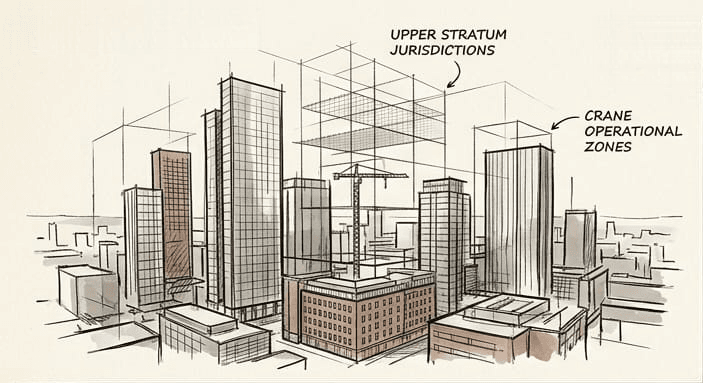
Pencil drawing of a city skyline with a tower crane among the towers, the airspace above it boxed into wireframe zones labelled upper stratum jurisdictions and crane operational zones
A crane’s operating zone can reach well past the site boundary, over neighbouring land and infrastructure.

Two sides of the same boundary

We coordinate between developers and neighbouring property interests. Who we act for, and on what terms, is agreed openly at the start of each engagement.

A site team in hard hats and high-visibility vests looking at a crane layout plan that shows two tower cranes over a building footprint

For developers and contractors

Coordinate neighbouring-property agreements and approval requirements before site mobilisation.

  • Crane access and oversailing agreements coordinated before mobilisation
  • Discussions with each relevant neighbouring property owner
  • Help progressing rail, tram, highway and aviation requirements
  • A coordinated project pack of agreements, approvals and crane restrictions
For developers and contractors
Apartment buildings along a Manchester waterway, with a tower crane rising behind them

For property owners and managing agents

Understand a proposed crane’s potential impact on your property and explore appropriate protections and terms.

  • A plain explanation of what a crane plan means for your building
  • Fees negotiated with reference to the site, duration and extent of oversailing
  • Photographic schedules of condition coordinated through specialist third-party providers where appropriate
  • The developer may meet agreed licence, survey and legal costs, subject to the terms negotiated for each project
For property owners

Each project is assessed individually. Agreements, approvals, fees and timescales depend on the circumstances and the decisions of the relevant parties. Aerovax’s role and scope of services are agreed for each engagement.

Identify the agreements and approvals your crane operation may require

A tower crane can slew through a full circle, at work and when it is left free to turn in the wind out of service. Choose a part of the plan to see who may need to be involved.

  • Oversailing may engage the property rights of whoever holds the airspace the jib could cross, and may need a licence or other agreement. Free slew when the crane is out of service is considered as well as working lifts.

    Freeholders, head lessees, management companies

  • Where a crane could affect the railway, Network Rail’s asset protection process may apply. The agreements, risk assessment and any restrictions on the crane are confirmed with Network Rail for the particular project.

    Network Rail asset protection

  • Crane operations near Metrolink infrastructure may require assessment, coordination and approved operating restrictions. Requirements are determined by the relevant infrastructure authority.

    Transport for Greater Manchester

  • Oversailing a public road usually needs the highway authority’s permission. The process, the fee and the conditions vary from one authority to the next.

    The council, or National Highways

  • A canal has an owner like any other neighbour, and oversailing it may need that owner’s agreement under its own process for works beside the water.

    Canal & River Trust, or the Bridgewater Canal Company

  • We help identify applicable crane notification and approval requirements with the relevant aerodrome and aviation authorities.

    The aerodrome operator and the Civil Aviation Authority

A small drone flying in a clear sky above the brick parapet of a building

Property protection and photographic records

We coordinate photographic schedules of condition and specialist surveys to help document neighbouring properties before construction begins.

Where aerial photography is appropriate, Aerovax works with specialist third-party drone operators who hold the relevant permissions and insurance for their work.

From identifying potentially affected properties to coordinating surveys, documentation and oversail discussions, we help bring the right people together before crane mobilisation.

Schedules of condition
  • One point of contact

    For the neighbouring owners, the authorities and the project team.

  • Specialist partners

    Surveyors, drone operators, solicitors and engineers, appointed for the work they do.

  • A coordinated approach

    Agreements, surveys and approvals run to one programme.

A development or crane planned next door?

Tell us your property address, the development nearby if you know it, and whether you are a freeholder, a managing agent or a leaseholder. We will look at what is proposed and explain what may be involved.

Protect a property

How the work runs

Every site is different, but the order of work is usually similar. It starts with the crane plan and ends with a closing inspection after the crane has come down.

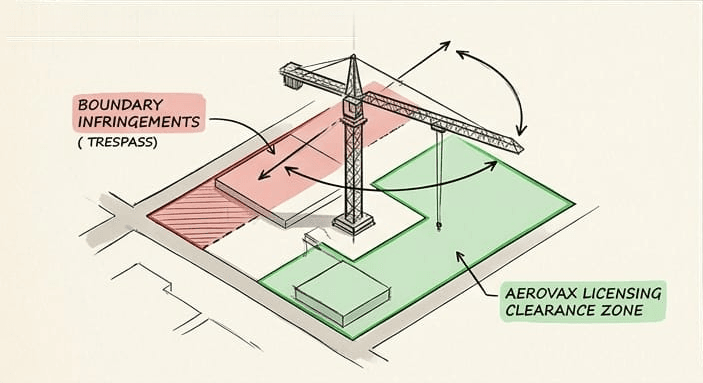
Plan drawing of a tower crane on a site, its jib swinging over a red boundary infringement zone marked trespass and a green Aerovax licensing clearance zone
A crane’s reach plotted against the property around it.
  1. Mapping the reach

    Working from the crane plan, we map each crane’s working and out-of-service reach against the surrounding property, roads, railways, tramways and waterways.

  2. Identifying property interests

    Title registers and leases are checked, with a solicitor’s input where needed, so the right parties are approached the first time.

  3. Opening the conversation

    Each relevant owner hears from us early: what is proposed, for how long, and what they are being asked to consider.

  4. Recording condition

    Photographic schedules of condition of neighbouring buildings, arranged through appointed surveyors and drone operators before work starts.

  5. Agreeing terms

    Fees, insurance, hours, loads and free slew are negotiated with each owner, and the third-party approvals are progressed alongside.

  6. Handing over

    Your contractor receives a coordinated project pack of agreements, approvals and crane restrictions, with contacts and payment dates.

  7. Seeing it through

    We can stay a point of contact while the crane is up, help arrange extensions if the programme moves, and coordinate the closing inspections.

More on how we work

Clear about our role

Aerovax provides project coordination and liaison services to developers and property owners. We are not developers and we do not build. Our role, responsibilities, fees and any conflicts of interest are agreed transparently for each engagement.

What we do, and what we do not
Independent advice
Property owners remain free to obtain independent legal and technical advice at any stage, and we encourage it.
Costs agreed per project
We aim to agree arrangements under which the developer funds reasonable survey and legal costs, subject to negotiation and the terms agreed for each project.
Specialists for specialist work
Legal, surveying, drone and engineering work is carried out by appointed providers under their own qualifications, permissions and insurance.

Built around Manchester’s skyline

Our focus is Manchester city centre and Salford, where new towers go up beside Victorian warehouses, railway viaducts, the Metrolink and the canals. It is one of the most crowded skylines in the country to put a crane into, and the same kinds of neighbours and approvals come up again and again.

Working across Manchester, Salford and the rest of Greater Manchester, from Ancoats, Castlefield and Deansgate to Salford Quays, Trafford and Stockport, we bring the relevant parties together early, helping projects understand their requirements before crane mobilisation. We can also support projects elsewhere in the UK.

Rail, tram and highway approvals
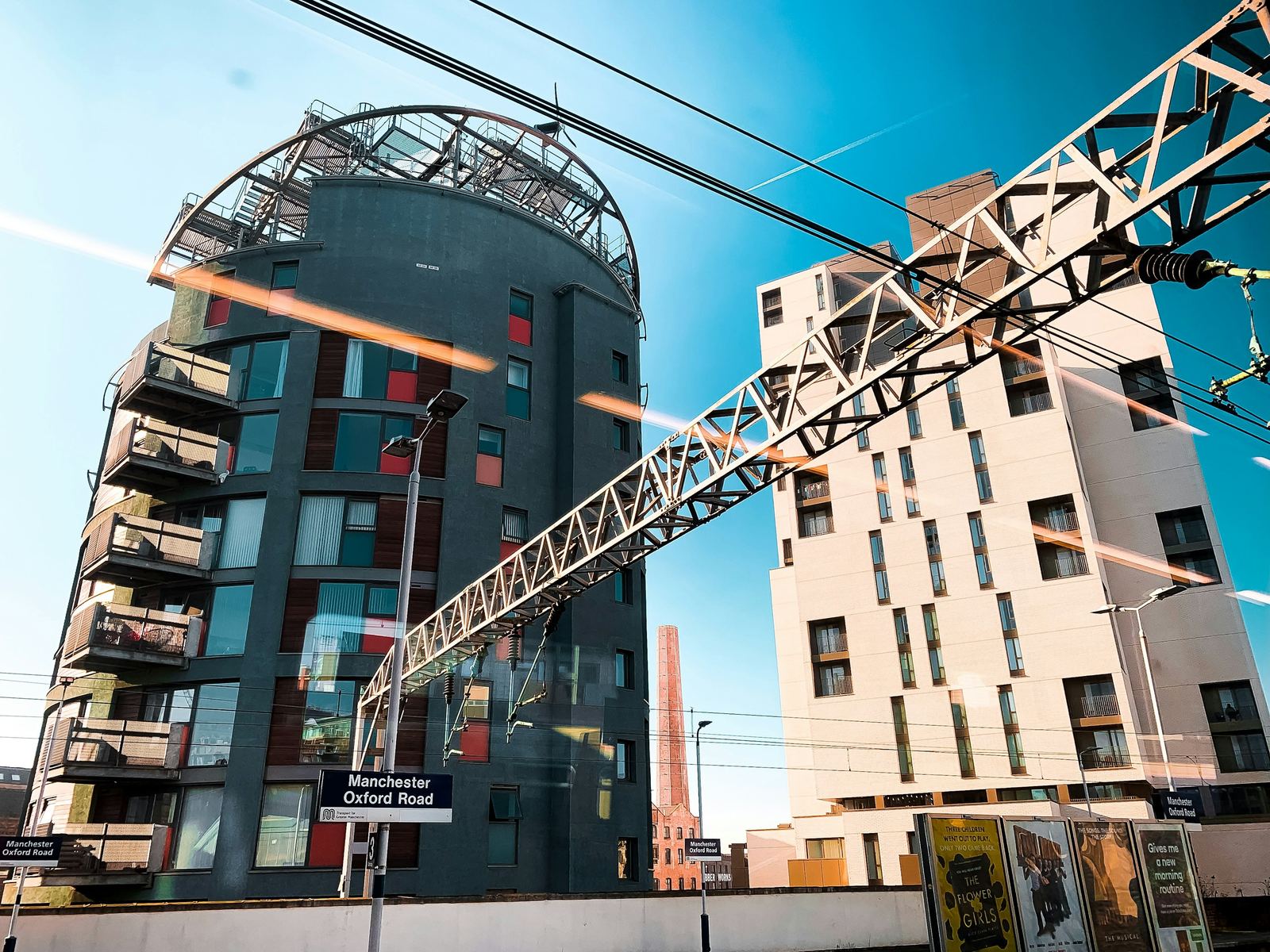
A train crossing the railway viaduct over Deansgate, with towers under construction and their cranes behind A yellow Metrolink tram bound for Piccadilly at a city centre stop at night A tower crane jib reaching across the sky between apartment buildings beside Manchester Oxford Road station

Common questions

The short answers. There are more on the questions page.

All questions

Can a developer swing a crane over my building without permission?

Generally not without the owner’s agreement or another legal basis. In England and Wales the courts have treated a crane jib in a neighbour’s airspace without consent as a trespass, notably in Anchor Brewhouse Developments v Berkley House in 1987, and oversail is usually dealt with by a licence or other agreement. The exact position depends on the land, the height and nature of the intrusion, the rights involved and any existing agreements or statutory powers, so it should be assessed for each site, and owners can take independent legal advice.

Is a licence needed if the crane never carries anything over the building?

It can be. When a tower crane is out of service, at night and at weekends, it is normally left free to slew so the jib can turn with the wind like a weathervane, which protects the crane in high winds. The jib may then come to rest over neighbouring property, so free slew is usually considered alongside any working oversail. Whether an agreement is needed depends on the crane plan and the property interests involved.

Who pays for an oversail licence?

Usually the developer or contractor who needs the crane pays any licence fee, and owners often ask for their reasonable survey and legal costs to be met as well. That is a matter of negotiation rather than a rule. We aim to agree arrangements under which the developer funds reasonable survey and legal costs, subject to negotiation and the terms agreed for each project.

Who does Aerovax act for?

Aerovax provides project coordination and liaison services to developers and property owners. Our role, responsibilities, fees and any conflicts of interest are agreed transparently for each engagement, and we tell everyone we deal with who we are working for. Property owners remain free to obtain independent legal and technical advice.

What we do, and what we do not

How early should we contact you?

As early as possible, ideally once the crane positions are known and before the main contractor is appointed. Infrastructure approvals can take months, and owners who hear about a crane early have time to consider the proposal and take advice.

Tell us about the site

Send the address or project reference and a line on the crane plan, or ask what a crane next door could mean for your building. We will come back to you directly.

What can we help with?

Or call 0333 188 0700. We use your details only to reply. Privacy notice