
, home
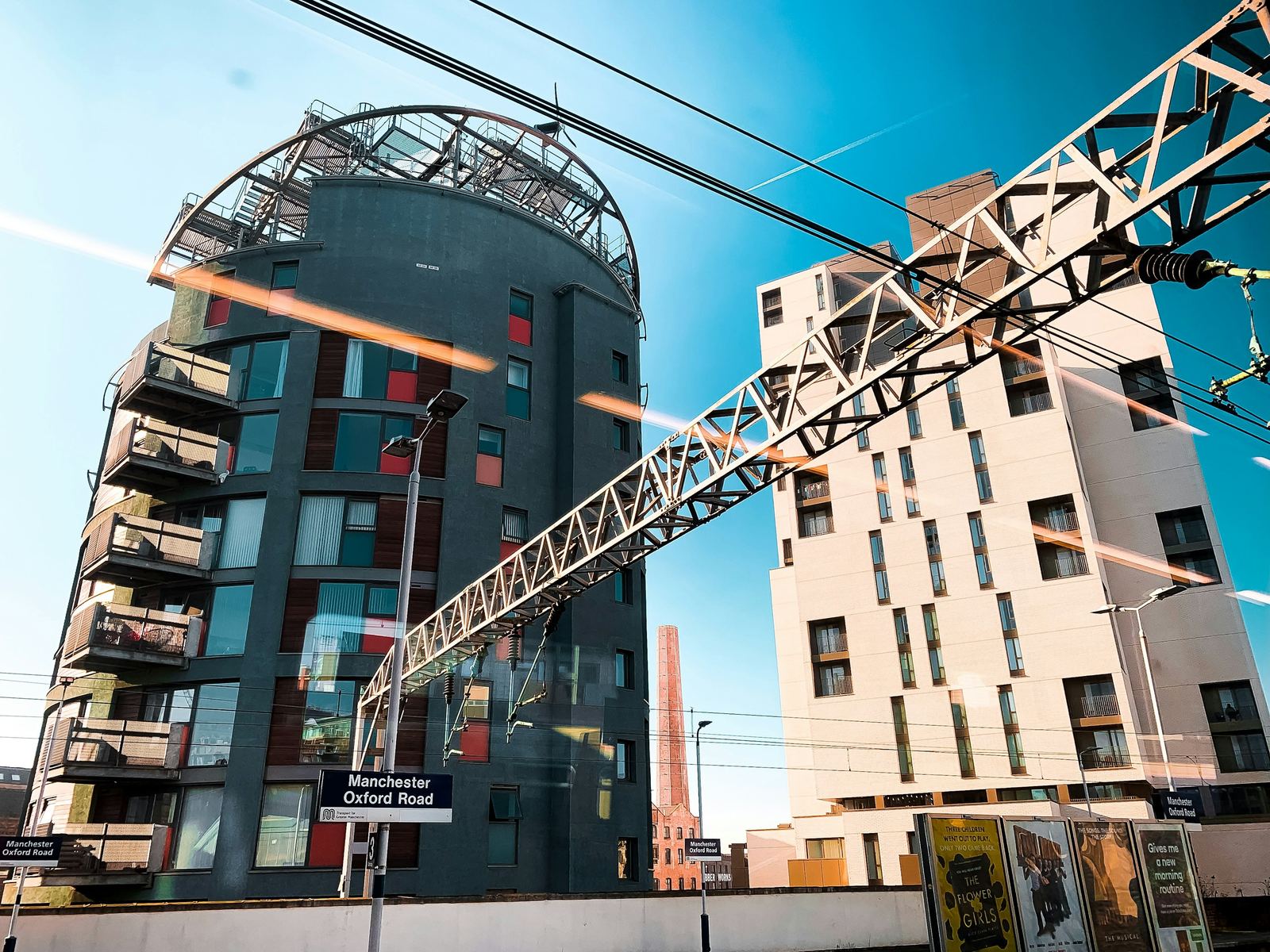
A tower crane jib reaching across the sky between apartment buildings beside Manchester Oxford Road station

Crane oversail licences

What an oversail licence is, why a tower crane may need one, what it usually says, and how the fee is worked out. Written for developers and property owners alike.

What oversail means

Oversail is any part of a crane passing through the airspace above land its operator does not control. For a tower crane that usually means the jib and counter-jib, the trolley and hook, and any load. A crane that slews through a full circle can oversail property anywhere within its radius, and depending on the crane configuration its reach may extend well beyond the construction boundary.

A crane can oversail even when it is not working. Out of service, at night and at weekends, a tower crane is normally left free to slew so the jib can turn with the wind, like a weathervane. That keeps the crane safe in high winds, and it means the jib can come to rest over a neighbour within reach. Any agreement needs to consider that as well as the lifts.
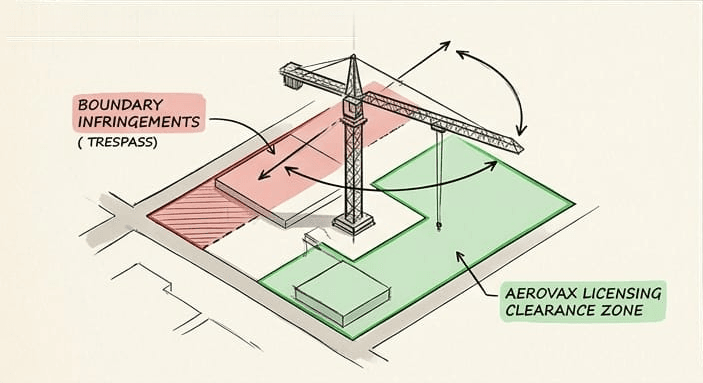

Plan drawing of a tower crane on a site, its jib swinging over a red boundary infringement zone marked trespass and a green Aerovax licensing clearance zone
A crane’s reach plotted against the property around it.

Why a licence may be needed

In England and Wales a landowner’s rights extend into the airspace above the land to the height needed for its ordinary use and enjoyment. The courts have treated a crane jib passing through that airspace without consent as a trespass, in some cases whether or not it carried a load or caused any damage.

The case most often cited is Anchor Brewhouse Developments v Berkley House, decided in the High Court in 1987, in which neighbouring owners were granted an injunction against a developer whose tower cranes oversailed their land without consent.

There is no general statutory right to oversail a neighbour’s land with a crane: neither the Party Wall etc. Act 1996 nor the Access to Neighbouring Land Act 1992 is generally regarded as providing one. In practice oversail is usually dealt with by agreement, most often a licence: a contract granting permission for a set period, on set terms. Other rights or statutory powers can apply on particular sites, so crane oversailing should be assessed against the crane plan, the property interests and the applicable law.

What a licence should cover

Every licence is drafted for its site, but most deal with the points below. Each party’s solicitor advises their own client and finalises the document.

The parties
The owner granting the licence, and the developer or contractor receiving it, with anyone else whose rights are affected, such as a head lessee.
The crane
Which crane or cranes, where they stand, the jib length and the height under the hook, usually with a plan showing the oversail area.
Duration
A start and an end date tied to the programme, and how the licence is extended if the programme moves, including the fee for any extra period.
Working and free slew
When the jib may oversail in use, and confirmation that it may weathervane freely over the property when the crane is out of service.
Loads
Whether loads may be carried over the property at all, and if so which, and any areas that loads must never cross.
Fee
The amount, and whether it is paid as one sum or weekly or monthly while the crane is up, with the date of the first payment.
Insurance
The contractor’s public liability cover and its amount, with a copy provided to the owner, and an indemnity for loss or damage caused by the crane.
Condition
The schedule of condition both sides have agreed, a second inspection at the end, and how any damage is to be made good.
Contacts
Who to call on site, day and night, and how complaints are handled while the crane is up.
Ending
When the licence ends, what happens if terms are broken, and the removal of the crane.

How fees are worked out

There is no fixed tariff for oversail. Fees are negotiated with reference to the site, the duration and the extent of oversailing, and not every agreement involves one.

The things that move a fee:

  • How long the jib will oversail, from erection to dismantling.
  • How much of the property it crosses, and how low it passes over the roof.
  • Whether loads will be carried over the property, or only the empty jib in free slew.
  • How the building is used: homes, offices, a school, a hotel, a listed building.
  • How many parties have to agree, and what each gives up.

A fee may be paid as one sum or weekly or monthly for as long as the crane is up. We can explain how a proposed figure has been arrived at, so both sides can judge it. Owners often ask for their reasonable survey and legal costs to be met as well, and that is negotiated for each project.

Not every nearby building is entitled to compensation. How much an owner is giving up, and what the crane plan actually needs from them, is what the conversation is about.

How long it takes

A single freeholder may agree within a few weeks. A block of flats takes longer, because a freeholder, a management company and a managing agent may all have a say, and a board may only meet monthly. A site with many neighbours takes longest of all, which is why it helps to start as soon as the crane positions are known.

Licences are only part of the timetable. If the jib comes near a railway, the Metrolink, a public road or an aerodrome, whatever those bodies require runs alongside, and it can be the slowest part.

Rail, tram, road and air approvals

Is a licence needed if the crane never carries anything over the building?

It can be. When a tower crane is out of service, at night and at weekends, it is normally left free to slew so the jib can turn with the wind like a weathervane, which protects the crane in high winds. The jib may then come to rest over neighbouring property, so free slew is usually considered alongside any working oversail. Whether an agreement is needed depends on the crane plan and the property interests involved.

Who pays for an oversail licence?

Usually the developer or contractor who needs the crane pays any licence fee, and owners often ask for their reasonable survey and legal costs to be met as well. That is a matter of negotiation rather than a rule. We aim to agree arrangements under which the developer funds reasonable survey and legal costs, subject to negotiation and the terms agreed for each project.

Who needs to agree for a block of flats?

It depends on who holds the relevant property interests in the airspace the jib may cross. That is often the freeholder, but a head lessee or a residents’ management company may hold rights too, and some top-floor leases include the roof. The title registers at HM Land Registry and the relevant leases are checked early, with a solicitor’s input where the position is not clear, so the right parties are approached.

What happens if a neighbour will not agree?

An owner can refuse. Concerns often come from not knowing what is proposed, or from terms that feel one-sided, and clear information can help. Where agreement is not reached, the project team may need to change the crane arrangement, for example with a different jib, a luffing crane or a slew restriction, and take its own legal advice on the options. That is one reason to identify neighbouring interests before the crane position is fixed.

Does a crane over a public road need a licence?

Usually some form of permission is needed. The highway authority decides what is required for a crane to oversail or work beside a public road, and on what conditions: for most roads that is the local council, such as Manchester City Council or Salford City Council, and for motorways and trunk roads it is National Highways. Many councils licence tower cranes over the highway under section 178 of the Highways Act 1980, but processes, fees and conditions differ, so the requirement is confirmed with the authority for each site.

Need help with an oversail licence?

Whether you are putting a crane up or a crane is planned near your building, send the site details and we will explain who may need to be involved and what a licence could cover.

What can we help with?

Or call 0333 188 0700. We use your details only to reply. Privacy notice