

When a crane is planned over your building
For freeholders, managing agents, residents’ management companies and leaseholders. If a development next door plans to work a tower crane over or near your building, we can help you understand its potential impact and explore appropriate protections and terms.
Your property rights, and what may be agreed

What we do for you
From the first sign of a scheme next door to the last inspection after the crane has gone.
Looking at the proposal
Tell us about the development or crane next door. We look at what is proposed and what the crane may do over your building: how low, how often, what it carries, for how long, and what happens when it is left free to turn in the wind.
Exploring appropriate terms
Fees negotiated with reference to the site, the duration and the extent of oversailing, insurance, limits on loads and hours, and a clear way to extend or end the licence. Your own solicitor advises you on the document.
Recording the building
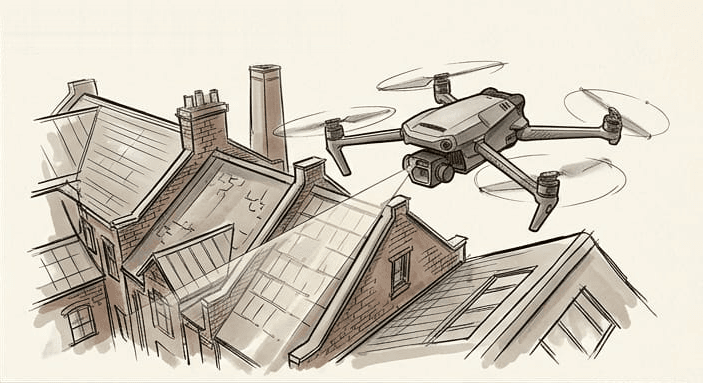
A photographic schedule of condition before work starts, arranged through appointed surveyors and drone operators, with a closing inspection when the crane comes down.
Keeping residents informed
A point of contact for residents, the board and the managing agent while the crane is up, so questions reach someone who can pass them to the right person.
Costs
We aim to agree arrangements under which the developer funds reasonable survey and legal costs, subject to negotiation and the terms agreed for each project.
Independent advice
You remain free to obtain independent legal and technical advice at any stage, and we encourage it. We will always tell you who we are working for.
Who needs to agree, in a block of flats
It depends on who holds the relevant property interests in the airspace the jib may cross. In many blocks that is the freeholder, often a residents’ management company or an investor, but a head lessee may hold the relevant rights, and some top-floor leases include the roof.
The title registers and the leases are checked before anything is signed, with property solicitors advising where needed, so any licence is granted by the right party. Leaseholders are usually kept informed through the management company or the managing agent.
Can a developer swing a crane over my building without permission?
Generally not without the owner’s agreement or another legal basis. In England and Wales the courts have treated a crane jib in a neighbour’s airspace without consent as a trespass, notably in Anchor Brewhouse Developments v Berkley House in 1987, and oversail is usually dealt with by a licence or other agreement. The exact position depends on the land, the height and nature of the intrusion, the rights involved and any existing agreements or statutory powers, so it should be assessed for each site, and owners can take independent legal advice.
How much is an oversail licence worth?
There is no fixed tariff. Fees are negotiated with reference to the site, the duration and the extent of oversailing, and they also reflect how low the jib passes, whether loads are carried over the property and how the building is used. A fee may be paid as one sum or periodically while the crane is up. Not every nearby building is entitled to compensation, and not every agreement involves a fee.
How fees are worked out
Who needs to agree for a block of flats?
It depends on who holds the relevant property interests in the airspace the jib may cross. That is often the freeholder, but a head lessee or a residents’ management company may hold rights too, and some top-floor leases include the roof. The title registers at HM Land Registry and the relevant leases are checked early, with a solicitor’s input where the position is not clear, so the right parties are approached.
Is a licence needed if the crane never carries anything over the building?
It can be. When a tower crane is out of service, at night and at weekends, it is normally left free to slew so the jib can turn with the wind like a weathervane, which protects the crane in high winds. The jib may then come to rest over neighbouring property, so free slew is usually considered alongside any working oversail. Whether an agreement is needed depends on the crane plan and the property interests involved.
Who does Aerovax act for?
Aerovax provides project coordination and liaison services to developers and property owners. Our role, responsibilities, fees and any conflicts of interest are agreed transparently for each engagement, and we tell everyone we deal with who we are working for. Property owners remain free to obtain independent legal and technical advice.
What we do, and what we do not
A development or crane planned next door?
Tell us your property address, the development nearby if you know it, and whether you are a freeholder, a managing agent or a leaseholder. We will look at what is proposed and explain what to expect.
- 0333 188 0700 Call the Manchester team
- enquiries@aerovax.co.uk For drawings and documents
- Manchester Working across Greater Manchester and the UK