

Crane oversail agreements, coordinated before mobilisation
For developers, main contractors and project managers. We help identify neighbouring property interests, coordinate crane oversail agreements and progress the relevant approvals before site mobilisation.
Unresolved oversail is a programme risk
Neighbour agreements are often left to the main contractor, after appointment, when the crane positions are fixed and the programme is already counting down. That is the most expensive moment to discover that a block of flats has three parties who may all need to agree, or that the jib reaches a Metrolink line.
Crane oversailing may engage neighbouring property rights, and an owner who has not agreed may be able to seek an injunction. Even the prospect of a dispute can hold up a crane while terms are discussed. Identifying the requirements early, against the crane plan, the property interests and the applicable law, gives the project time to deal with them and to budget for them.

It starts with the crane plan
What a crane needs should be assessed against the crane plan, the property interests around the site and the applicable law, so that is where we begin: where each crane will stand, its jib length and height, how long it stays, and how it is left when it is out of service.
If the crane has not been chosen yet, we work from the logistics plan with your crane and construction specialists, who remain responsible for the technical design. What comes back is a map of what the crane may affect and a list of who may need to be involved.
What we deliver
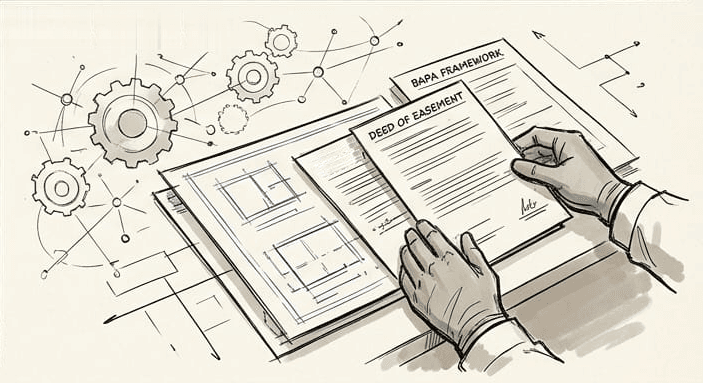
One point of contact takes the crane from a drawing to a coordinated set of agreements and approvals, and stays with it until it comes down.
A map of what the crane may affect
Each crane’s working radius and out-of-service slew, drawn over the title plans and the railway, tramway, roads and waterways around the site, with the parties who may need to be involved.
Oversail agreements, coordinated
Discussions with each relevant neighbouring owner from the first letter onwards, covering duration, hours, loads, insurance, condition records and fees. Each party’s solicitor finalises the documents.
Third-party approvals
Help preparing and progressing what Network Rail, Transport for Greater Manchester, the highway authority and the aviation bodies ask for. The decisions and conditions are theirs.
Photographic schedules of condition
Records of neighbouring buildings before work starts, arranged through appointed surveyors and drone operators, documenting their condition at the time.
A coordinated project pack
The agreements, the approvals and their conditions and the crane restrictions in one place for your contractor, with contacts and payment dates.
Someone on the end of the phone
We can stay a point of contact for neighbours while the crane is up, and help arrange extensions before agreements run out if the programme moves.
When to bring us in
The earlier the better, and ideally before the main contractor is appointed. Rail and tram approvals run on their own timetables, and owners who hear early have time to consider the proposal and take advice.
-
At appraisal
What the crane strategy may affect, who holds the property interests, and which approvals may drive the programme.
-
Before planning consent
First contact with the owners most affected, and early discussion with Network Rail or Transport for Greater Manchester where the crane will be close.
-
Before appointing a contractor
Agreements and approvals in progress, so the tender can reflect the crane arrangement and the likely fees.
-
Before mobilisation
Agreements and approvals taken as far as the parties allow, condition records made, and the project pack handed over.
Costs discussed up front
Agreeing licence fees before the crane goes up lets them sit in the appraisal and the tender rather than arrive later as a dispute. Fees are negotiated with reference to the site, the duration and the extent of oversailing, and we flag early where one is likely to be higher, such as a low jib over a school, a hotel or a listed building.
Owners will usually ask for their reasonable survey and legal costs to be met, and how that is handled is negotiated for each project. Our own fees and scope are agreed with you before any work starts.
How early should we contact you?
As early as possible, ideally once the crane positions are known and before the main contractor is appointed. Infrastructure approvals can take months, and owners who hear about a crane early have time to consider the proposal and take advice.
What happens if a neighbour will not agree?
An owner can refuse. Concerns often come from not knowing what is proposed, or from terms that feel one-sided, and clear information can help. Where agreement is not reached, the project team may need to change the crane arrangement, for example with a different jib, a luffing crane or a slew restriction, and take its own legal advice on the options. That is one reason to identify neighbouring interests before the crane position is fixed.
How long does it take to agree oversail licences?
It depends on the number of parties, how they are organised and the terms involved. A single freeholder may agree within weeks; a block with a freeholder, a management company and a managing agent usually takes longer. Network Rail, Transport for Greater Manchester and highway authorities work to their own timetables, so it helps to start as soon as the crane positions are known.
What is a Network Rail BAPA?
A Basic Asset Protection Agreement, or BAPA, is an agreement Network Rail commonly asks for before outside works that could affect the railway. It generally covers Network Rail’s costs of reviewing the proposals, such as the risk assessment and method statements, and of any supervision on site. Whether a BAPA or another agreement is needed, and what restrictions apply to a crane, are confirmed with Network Rail’s asset protection team for each project.
Working beside the railway
Can a crane oversail the Metrolink?
Crane operations near Metrolink infrastructure may require assessment, coordination and approved operating restrictions, and the requirements are determined by Transport for Greater Manchester for each project. Its published guidance for working near the network restricts cranes oversailing the tramway and asks for a slew restriction plan, so it is worth contacting it early, starting with its Initial Enquiry Form.
Cranes near the Metrolink
Tell us about the scheme
Send the site address and whatever you have on the crane strategy: positions, jib lengths and programme. We will tell you who the crane may affect and what is likely to be involved.
- 0333 188 0700 Call the Manchester team
- enquiries@aerovax.co.uk For drawings and documents
- Manchester Working across Greater Manchester and the UK