
, home
A train crossing the railway viaduct over Deansgate, with towers under construction and their cranes behind

Rail, tram, road and air approvals for tower cranes

A crane beside Manchester’s railways, the Metrolink, a public road or within reach of an aerodrome may need more than a neighbour’s agreement. We help identify the requirements and progress the applications alongside the oversail agreements. The decisions rest with the authorities.

The authorities around a city site

Manchester city centre is threaded with infrastructure that belongs to public bodies: Victorian railway viaducts, the Metrolink running through the streets, the main roads and the canals. A tower crane on a tight plot will often reach at least one of them, and each has its own process, its own lead times and its own conditions.

Those approvals can be the slowest part of preparing a site for a crane, so it helps to start them as soon as the crane positions are known and run them alongside the neighbour agreements, to one programme. What each body asks for, and the conditions it sets, are confirmed with it for the particular project.
Network Rail

Where a crane could affect the railway, in use or if it failed, Network Rail’s asset protection process may apply. The process, the risk assessment and any restrictions on the crane have to be confirmed with Network Rail for the particular project. Network Rail often asks that cranes do not oversail its land, and a slew restriction is one of the measures that may be required.

Engagement usually runs through Network Rail’s asset protection team, and may involve an agreement such as a Basic Asset Protection Agreement, or BAPA, covering Network Rail’s costs of reviewing the proposals and of any supervision. Method statements and the crane arrangement may need to be accepted before work starts, and some lifts may need access to the railway booked well in advance.

We help prepare the information Network Rail asks for and coordinate the submissions with the project’s crane and construction specialists. Acceptance, and any conditions, are for Network Rail.

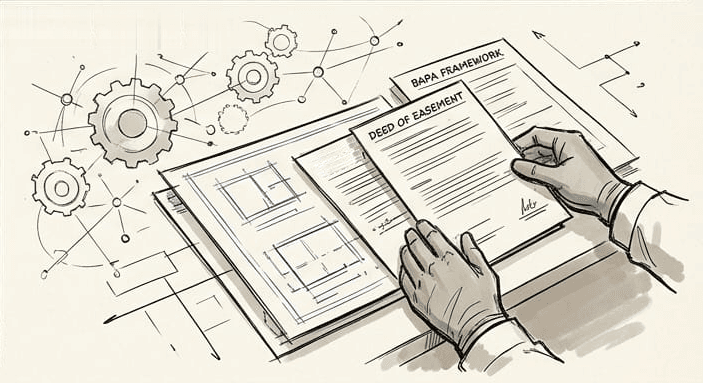
Pencil drawing of hands holding a signed deed over site plans, with a BAPA framework document and linked gears behind
Rail agreements and neighbour licences, progressed together.

Public roads

A crane that oversails or works beside a public road usually needs the highway authority’s permission. For most roads that is the local council, such as Manchester City Council, Salford City Council or Trafford Council, and for motorways and trunk roads it is National Highways.

Many councils licence a tower crane over the highway under section 178 of the Highways Act 1980, and some cite other provisions as well, so no single section covers every crane next to a road. Processes, fees, notice periods and conditions differ between authorities and are confirmed for each site. Any permission is separate from a permit to stand a mobile crane on the road itself, and from a licence for scaffolding or hoarding on the pavement.

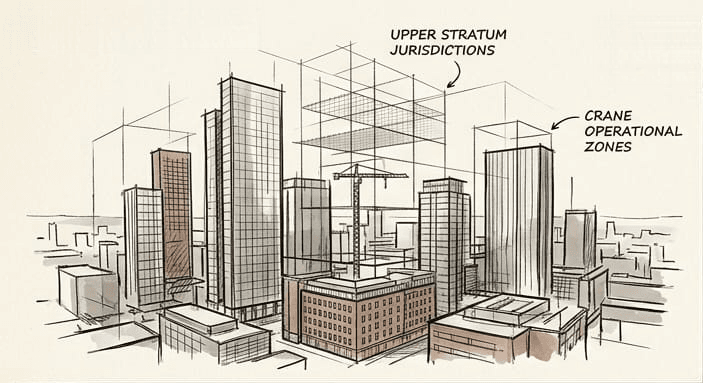
Pencil drawing of a city skyline with a tower crane among the towers, the airspace above it boxed into wireframe zones labelled upper stratum jurisdictions and crane operational zones
The airspace above the cranes is regulated too.

Aerodromes and the CAA

Cranes near an aerodrome, and tall cranes anywhere, may need to be notified to the aerodrome operator or the Civil Aviation Authority, and some need obstacle lighting. Requirements depend on the aerodrome, the crane height and the applicable procedures. We help identify applicable crane notification and approval requirements with the relevant aerodrome and aviation authorities. In Greater Manchester the aerodromes include Manchester Airport and City Airport Manchester at Barton.

The CAA’s published guidance is a starting point. It asks for a crane to be notified to the aerodrome if it will be used within 6 kilometres of it and stand more than 10 metres above ground level, or above the surrounding structures or trees if they are taller, and for any crane of 100 metres or more to be notified wherever it stands, at least eight weeks before it goes up. Cranes of 150 metres or more need obstacle lighting under the Air Navigation Order, and an aerodrome can set its own requirements on top.

Source: Civil Aviation Authority, crane notification (checked October 2026)

Canals

A canal has an owner like any other neighbour, and a jib that oversails it may need that owner’s agreement. Most of Manchester’s canals, including the Rochdale and the Ashton, are cared for by the Canal & River Trust, which has its own process for works beside its waterways. The Bridgewater Canal belongs to the Bridgewater Canal Company.

What is a Network Rail BAPA?

A Basic Asset Protection Agreement, or BAPA, is an agreement Network Rail commonly asks for before outside works that could affect the railway. It generally covers Network Rail’s costs of reviewing the proposals, such as the risk assessment and method statements, and of any supervision on site. Whether a BAPA or another agreement is needed, and what restrictions apply to a crane, are confirmed with Network Rail’s asset protection team for each project.

Working beside the railway

Can a crane oversail the Metrolink?

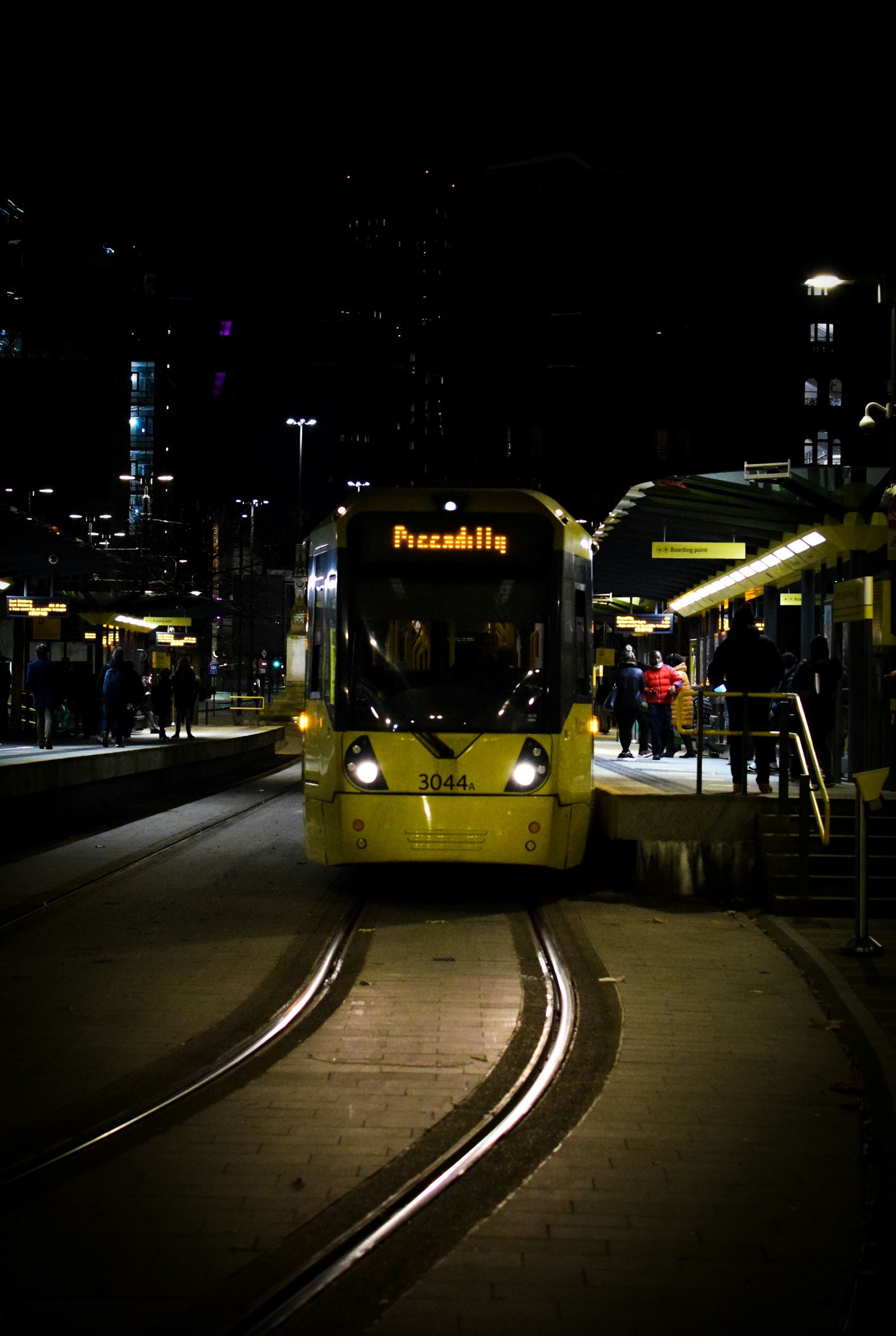
Crane operations near Metrolink infrastructure may require assessment, coordination and approved operating restrictions, and the requirements are determined by Transport for Greater Manchester for each project. Its published guidance for working near the network restricts cranes oversailing the tramway and asks for a slew restriction plan, so it is worth contacting it early, starting with its Initial Enquiry Form.

Cranes near the Metrolink

Does a crane over a public road need a licence?

Usually some form of permission is needed. The highway authority decides what is required for a crane to oversail or work beside a public road, and on what conditions: for most roads that is the local council, such as Manchester City Council or Salford City Council, and for motorways and trunk roads it is National Highways. Many councils licence tower cranes over the highway under section 178 of the Highways Act 1980, but processes, fees and conditions differ, so the requirement is confirmed with the authority for each site.

Do tower cranes need to be notified to the airport?

Often, yes. Cranes near an aerodrome, and tall cranes anywhere, may need to be notified to the aerodrome operator or the Civil Aviation Authority, and some need obstacle lighting. Requirements depend on the aerodrome, the crane height and the applicable procedures, so we help identify applicable crane notification and approval requirements with the relevant aerodrome and aviation authorities.

Cranes and aviation

A crane near the railway or the tram?

Send the site address and the crane positions if you have them. We will help identify which approvals may apply and what is likely to be involved.

What can we help with?

Or call 0333 188 0700. We use your details only to reply. Privacy notice